
How to Identify Pipe Corrosion Before It Leaks
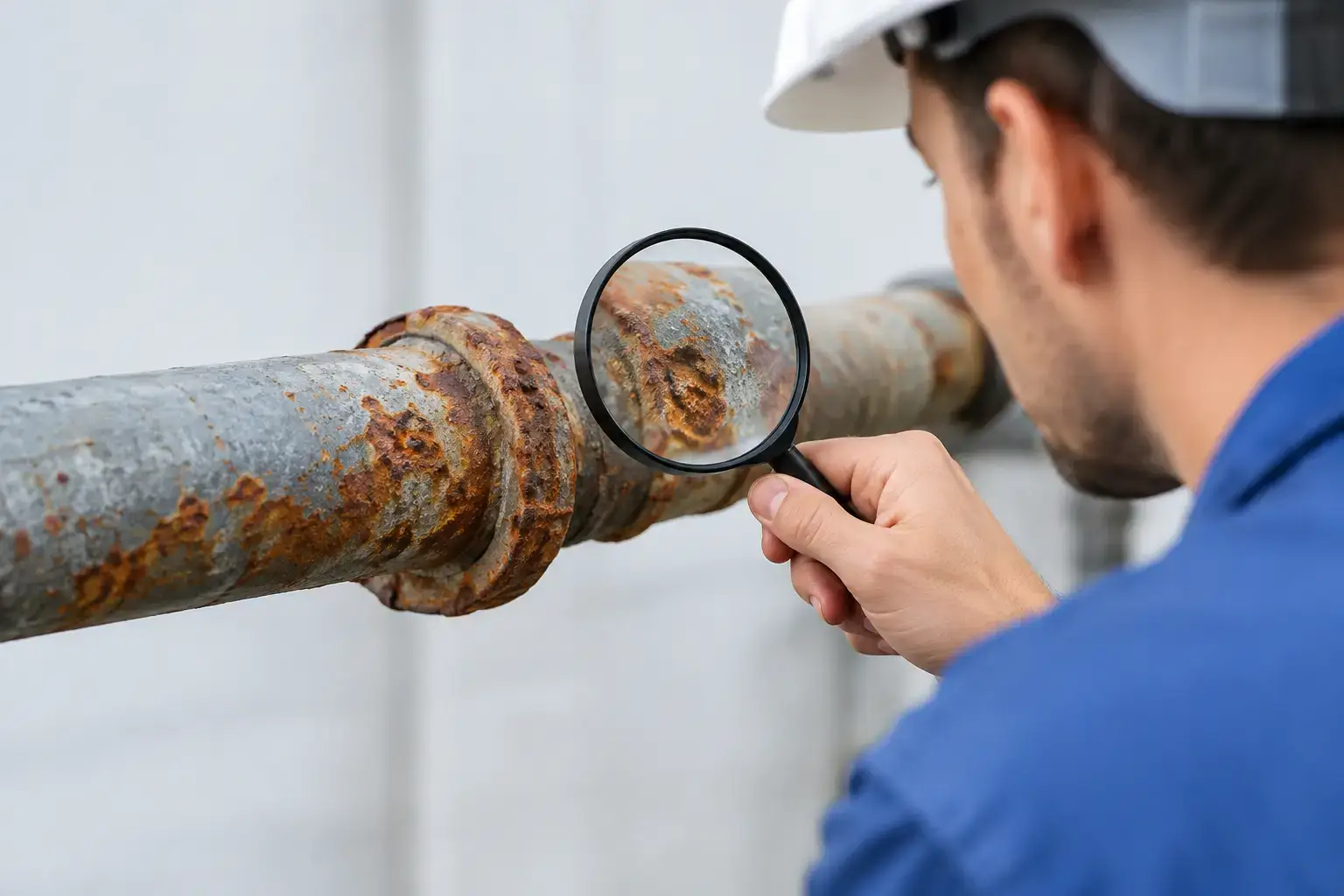
Brown staining beneath a sink, a metallic taste in the water, or a tap that has gradually lost pressure can look like minor household annoyances. They can also be the first warning signs of pipe deterioration. Knowing how to identify pipe corrosion early gives you more options: a targeted repair, planned pipe replacement, or a maintenance programme before a pinhole leak damages walls, flooring, stock or equipment.
Corrosion is not always visible, and it does not affect every plumbing material in the same way. Older galvanised steel pipework is particularly prone to internal rusting, while copper can develop pitting and plastic fittings can be affected by faults in adjoining metal components. A proper assessment looks beyond the obvious stain to find the cause, the extent of the issue, and the most sensible repair.
What pipe corrosion looks like
Pipe corrosion is the gradual breakdown of a pipe or fitting caused by water chemistry, oxygen, electrical currents, incompatible metals, soil conditions or simple age. It may occur on the outside of a pipe, within the pipe wall, or both. The visible result might be rust, blue-green staining, flaky deposits, dampness or a small leak. The hidden result can be restricted water flow, weakened pipe walls and poor water quality.
The appearance often depends on the material. Galvanised steel commonly develops orange-brown rust and thick internal scale. Copper may show blue-green residue around joints or a small, sharply defined pinhole leak. Brass valves and fittings can become dull, pitted or develop pale deposits. In buried pipework, external corrosion can occur where soil remains wet or where protective coatings have failed.
A corroded fitting does not automatically mean every pipe in the property must be replaced. Equally, repairing one leak without checking the surrounding system can lead to repeated call-outs. The right approach depends on pipe age, material, location, water use and the condition of the wider installation.
How to identify pipe corrosion around your property
Start with areas where pipes are exposed or where a leak would first become noticeable: under sinks, around hot water systems, near toilets, in ceiling spaces, plant rooms, garages and beneath commercial kitchen or laundry equipment. Use a torch and look carefully around joints, valves, bends and pipe supports.
Surface discolouration is one of the clearest clues. Orange or brown marks can indicate rusting steel, while blue-green staining is often associated with copper. White, chalky residue may be mineral scale, but when it gathers around a fitting alongside dampness, it can indicate a slow leak or corrosion at the joint.
Pay attention to the condition of the pipe itself. Flaking, blistered or heavily pitted metal should be investigated, particularly if the pipe feels damp or there is staining on nearby timber, plasterboard or insulation. A pipe can corrode from the inside without dramatic external damage, so visible checks are only one part of the picture.
Changes in water are equally useful warning signs. Water that initially runs brown, yellow or rusty after a tap has not been used for several hours can point to internal corrosion in older metal pipes. A metallic taste, recurring sediment in tap aerators, or unusually coloured hot water can also warrant an inspection. If discolouration affects only hot water, the water heater or its connected pipework may be the likely source.
Reduced water pressure is another common symptom. When corrosion products build up inside galvanised pipes, the internal diameter gradually narrows. One shower may lose flow while other fixtures remain acceptable, or the whole building may show a steady decline over time. Low pressure can also be caused by a faulty pressure limiting valve, a partially closed valve, a leak or a supply issue, so it should not be diagnosed from one symptom alone.
Signs that need prompt attention
Some corrosion issues can be monitored during planned maintenance. Others should be checked promptly to avoid water damage or a sudden failure. Arrange a licensed plumber if you notice several of the following signs together:
- recurring damp patches, mould or a musty smell near walls, cupboards or ceilings
- a rising water bill with no clear increase in use
- stains around pipe joints, valves, meters or hot water equipment
- pinhole leaks, drips or temporary patch repairs on older metal pipework
- rusty water, sediment or poor flow affecting multiple fixtures
- corrosion where different metals meet, such as copper pipe connected to galvanised steel.
For businesses, small leaks can become a larger operational problem quickly. Water near electrical equipment, ceiling voids, food preparation areas, stock rooms or production machinery should be treated as urgent. Isolate the local water supply if it is safe to do so, protect the area from further damage, and arrange professional assistance.
Why pipes corrode in Australian properties
There is rarely one cause. Water quality varies by region, and properties can have different supply sources, treatment systems, pressure settings and pipe materials. Coastal conditions, humid plant rooms, wet soils and ageing infrastructure can all accelerate external corrosion.
A common issue is galvanic corrosion. This happens when dissimilar metals are connected in the presence of water, creating an electrical reaction that causes one metal to deteriorate faster. Correct fittings and dielectric separation help manage this risk. Poorly supported pipes can also suffer where moisture becomes trapped against metal surfaces.
Copper pitting is more complex. It can be influenced by water chemistry, water velocity, installation practices and local conditions. Replacing a visibly damaged section may stop the immediate leak, but a plumber may recommend further testing or inspection if similar pinholes have appeared elsewhere.
Stray electrical current is another concern worth taking seriously. If corrosion is concentrated around particular fittings or pipe sections, an electrician may need to check the earthing and bonding arrangements. Plumbing and electrical systems should never be altered by an unqualified person.
Check the system, not just the stain
A professional inspection goes further than looking at exposed pipework. Depending on the property and symptoms, a plumber may check water pressure, inspect valves and fittings, assess pipe materials, test for active leaks, examine the hot water system and review areas where pipes run through walls, floors or underground.
In commercial, industrial and rural settings, the inspection may also consider pumps, tanks, filtration equipment, irrigation lines and process water systems. Water sitting in seldom-used lines, aggressive water conditions and complex mixed-metal systems can change both the risk and the repair method.
For concealed pipework, non-invasive leak detection can help locate moisture or pressure loss before walls and floors are opened. Where internal buildup is suspected, the plumber may recommend a targeted investigation rather than replacing pipework based on age alone. This helps balance immediate cost against the risk of ongoing failures.
What to do if you suspect corrosion
Do not scrape heavily corroded pipework or tighten old fittings aggressively. A fitting that has held together for years can fail when disturbed. Take clear photos of any staining or residue, note whether the issue affects hot or cold water, and record when you first noticed it.
If there is an active leak, turn off the nearest isolation valve where practical. If that does not stop the flow, use the main water shut-off valve and contact a plumber. Avoid relying on tape or temporary sealants for anything more than a very short-term emergency measure, especially in concealed areas.
The repair might involve replacing a short damaged section, renewing corroded valves and connectors, correcting incompatible materials, or planning a broader repipe. A full replacement can be the better long-term value when an older galvanised system has repeated leaks, significant internal restriction or widespread corrosion. For one isolated issue in otherwise sound pipework, a local repair may be entirely appropriate.
A trusted local PERL plumbing team can assess the visible signs, investigate the likely cause and explain practical repair options for your property. Early action is not about replacing pipes unnecessarily. It is about making an informed decision before a slow weakness becomes an expensive leak behind a wall or under a floor.