
How to Prevent Tree Root Blockages in Drains
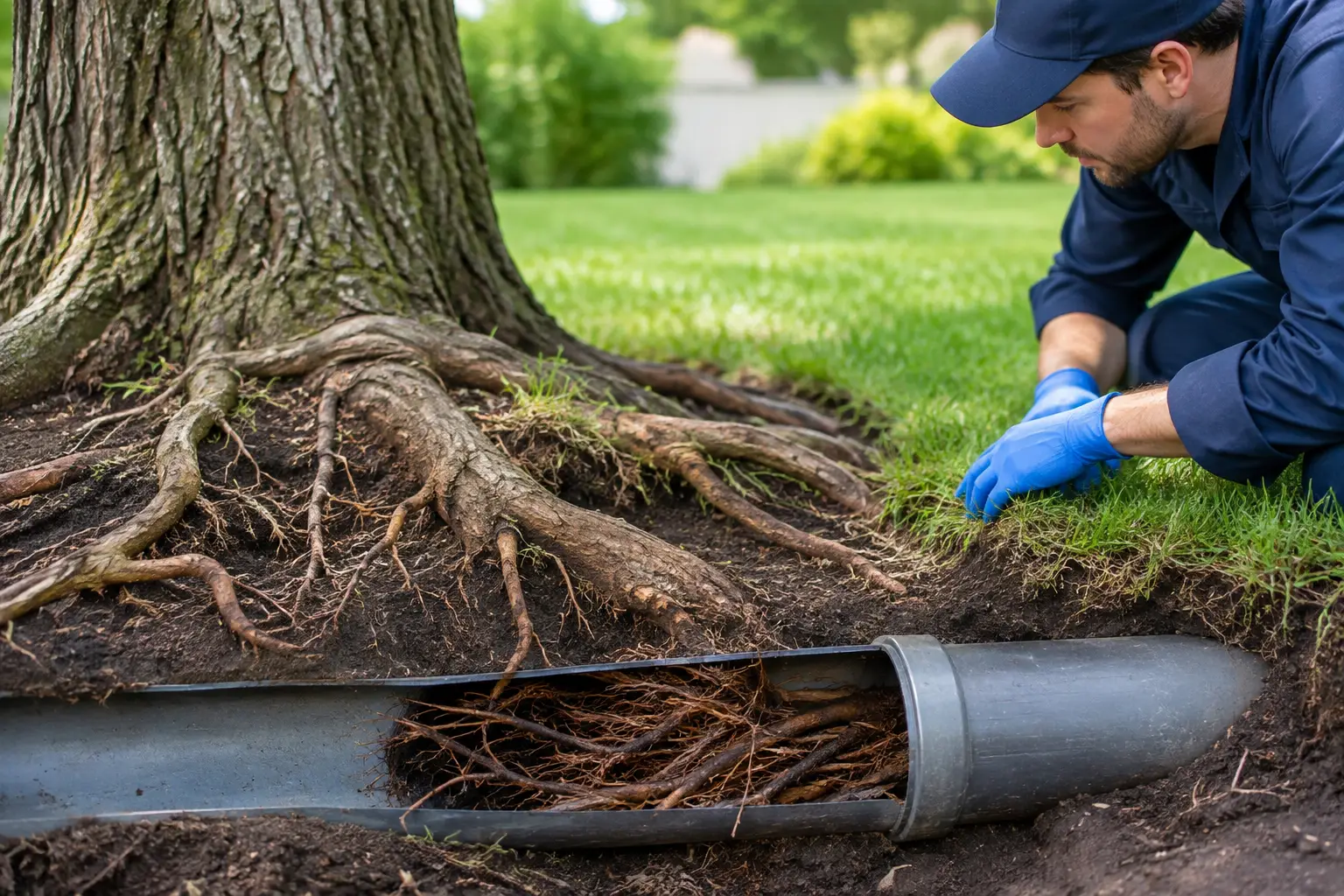
A slow-draining toilet, gurgling shower or overflow near an outside gully can point to more than a simple blockage. Knowing how to prevent tree root blockages helps protect your drains before roots turn a small pipe defect into an expensive excavation job. This matters especially on established properties, where mature trees and older drainage pipes often occupy the same ground.
Tree roots are drawn to the water, nutrients and air that can escape from tiny cracks, failed joints and ageing pipe connections. Once they find a way in, the fine roots multiply inside the drain and catch toilet paper, grease, wipes and other debris. The result is a blockage that usually gets worse with time, often returning after a temporary clear-out.
Why tree roots enter drainage pipes
Healthy, correctly installed pipes are not generally easy for roots to penetrate. The issue is usually a weakness already present in the drainage system. Older earthenware pipes, concrete pipes and some early plastic installations can develop displaced joints, fractures or worn seals as the ground moves over time. A pipe can also crack after vehicle loading, nearby construction work or soil movement during very wet and very dry periods.
Roots do not always mean the tree has caused the original damage. In many cases, the root has found an existing opening and made it larger. That distinction is useful because cutting roots without addressing the pipe defect may restore flow for a while, but it does not provide a lasting repair.
How to prevent tree root blockages before planting
The best time to manage root risk is before a tree goes in the ground. If you are planning landscaping, a new build, extension or drainage upgrade, identify the route of sewer and stormwater pipes first. A qualified drainlayer can help map services and advise where new planting will create problems later.
Keep larger trees well away from underground drains, particularly species known for vigorous or spreading root systems. The right setback depends on the mature size of the tree, soil conditions, pipe depth and pipe material. A small ornamental tree may be suitable closer to a drain than a large shade tree, but it is still worth checking the likely root spread rather than relying on the current size of a young plant.
Where planting near services cannot be avoided, consider a purpose-designed root barrier. These barriers can redirect roots downward or away from a protected area, but they must be installed correctly and are not a substitute for sound drainage pipes. They are most effective when included in the landscape plan from the start.
For commercial sites, rural properties and developments with significant landscaping, coordinate drainage and planting plans before construction is complete. It is far easier to adjust a garden bed or tree location than to relocate a sewer line beneath finished paving, car parks or driveways.
Maintain drains so roots have less opportunity
Prevention is not only about trees. Well-maintained drainage gives roots fewer entry points and makes early issues easier to spot. Older properties should have drains inspected when there are recurring blockages, unexplained wet patches, persistent smells or changes in how fixtures drain.
A CCTV drain inspection is particularly useful because it shows the condition inside the pipe. It can identify fine root intrusion, cracked sections, open joints, displaced pipework and sagging sections where debris settles. Rather than guessing where the problem is, an inspection allows repairs to target the affected area.
If roots are found early, mechanical root cutting or high-pressure water jetting may clear the line and restore flow. This should be carried out by an experienced drainage professional. Aggressive cleaning on badly deteriorated pipes can expose the true extent of the damage, and a clear pipe may still need repair if joints or walls are compromised.
Avoid treating repeated blockages with caustic drain chemicals. They rarely remove established root masses, can damage some pipe materials and may create a hazard for anyone working on the line afterwards. Flushing wipes, sanitary products, paper towel, fats or food scraps also compounds the issue by giving roots more material to catch.
Watch for early warning signs
Root blockages often build gradually, so the first signs can be easy to dismiss. A single slow basin may be a local waste-pipe issue. When several fixtures drain slowly, toilets bubble, or water backs up through a floor waste or gully, the problem may be further down the drainage line.
Pay attention to these recurring symptoms:
- gurgling sounds from toilets, basins or shower wastes
- bad smells around gullies or outside drainage areas
- toilets that rise higher than normal before draining
- wastewater or sewage appearing at an outside gully
- damp, unusually green patches of lawn near the drain route
- blockages that return soon after being cleared.
Do not wait for a full overflow if these signs keep returning. Sewage backups can damage flooring, landscaping and building materials, and they can interrupt operations at commercial premises. Early investigation is usually cleaner, faster and more cost-effective than an emergency response after the line has failed.
Repair the pipe, not just the symptom
The right repair depends on what the inspection finds. A short section with a broken joint or crack may need excavation and replacement. If a longer run is affected but structurally suitable, pipe relining can sometimes create a new internal pipe with minimal digging. This is not appropriate for every situation, particularly where the pipe has collapsed, has severe misalignment or needs its grade corrected.
On older sites, replacing an ageing section with modern pipework can be the more sensible long-term option. It reduces the number of joints roots can exploit and gives the drainage system a reliable foundation for future landscaping and renovations.
Property owners should also check whether the affected pipe is private or part of a utility-managed connection. Responsibility can vary depending on where the issue sits, so a drainage professional can help identify the likely extent of the private system before repair work begins. If a protected or significant tree is involved, check local council requirements before major root pruning or removal.
Protect drains during building and landscaping work
Renovations can create root-related drainage problems indirectly. Heavy machinery, skip bins, stored materials and vehicles can crack shallow drains or shift older pipework, particularly if they pass repeatedly over the same area. Before work begins, mark known service routes and keep unnecessary loads away from them.
Landscapers should also avoid planting directly over inspection points, gullies or access covers. These points need to remain visible and reachable for maintenance. Dense garden beds and paving can hide early overflow signs and make inspections more difficult when a blockage occurs.
For facilities managers, scheduled drainage maintenance is often a better option than reacting to disruptions. Sites with mature landscaping, older infrastructure, shared amenities or high wastewater use can benefit from periodic inspections and cleaning based on their history. The appropriate interval depends on the site, not a one-size-fits-all calendar.
When to call a drainage professional
A plunger may help with a minor fixture blockage, but it will not resolve roots in the main drain. Call a qualified plumbing and drainage team when there is sewage overflow, repeated blockages, multiple fixtures affected or any sign that wastewater is escaping outdoors. If sewage is backing up inside, limit water use until the issue has been assessed.
Your local PERL Plumbing experts can investigate the cause, clear the blockage safely and recommend whether maintenance, targeted repair, relining or replacement is the practical next step. The goal is not simply to get water moving today, but to reduce the chance of the same drain failing again after the next spell of rain or period of root growth.
A tree can be a valuable part of a property without becoming a drainage problem. Keep pipework in good condition, plant with the mature landscape in mind, and act on recurring warning signs while the repair is still manageable.