
Is a Hot Water Heat Pump Right for Your Home?
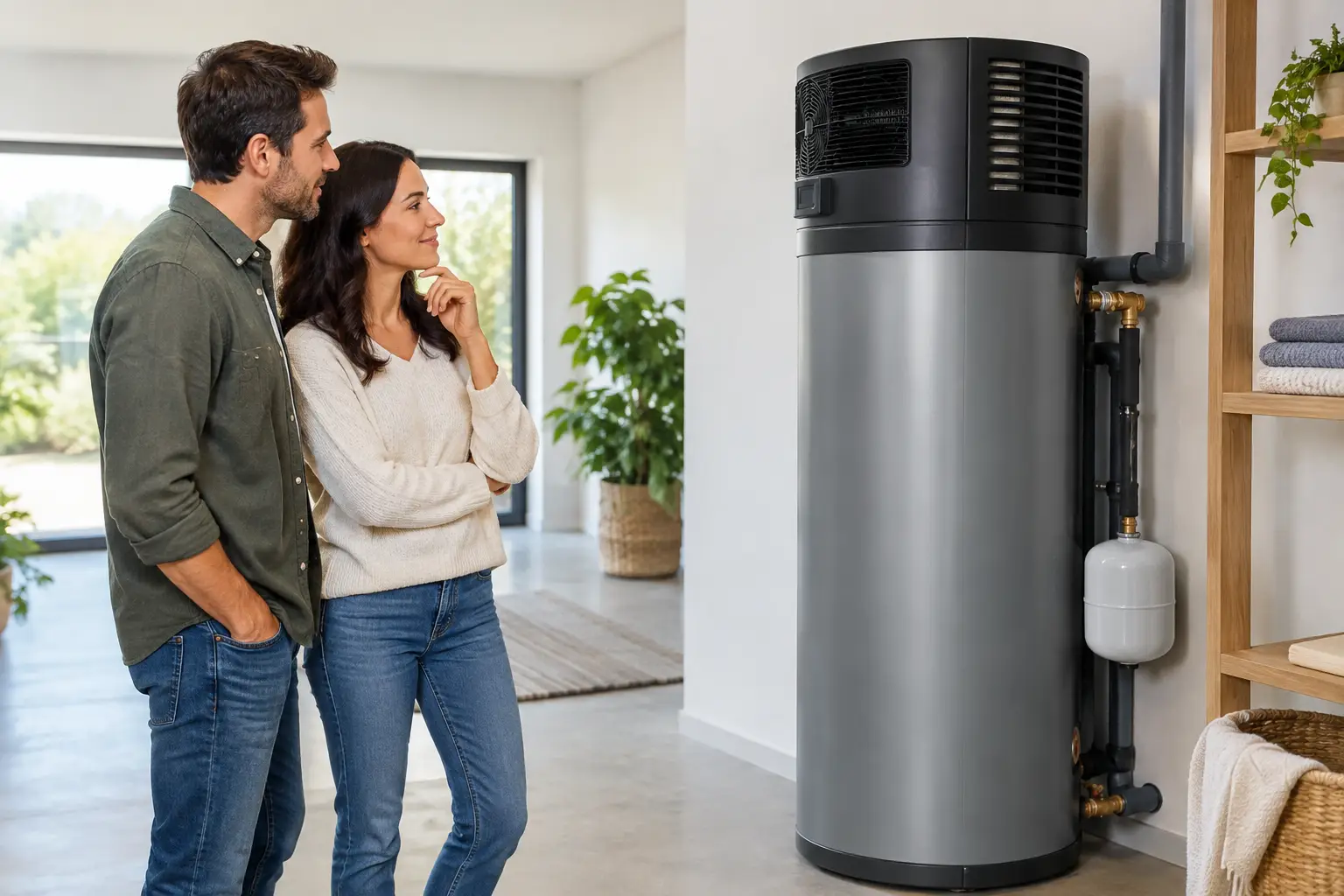
A hot water heat pump is often raised when households want lower running costs without changing how they use hot water. It can be a practical upgrade, particularly where an ageing electric storage unit is due for replacement. But the best result comes from looking beyond the unit itself: household demand, climate, location, electrical supply and installation quality all affect how well the system performs.
For homeowners, builders and property managers, the question is not simply whether heat pump water heating is efficient. It is whether the proposed system is correctly matched to the property and can be installed in a way that remains reliable, serviceable and considerate of the people nearby.
How a hot water heat pump works
Unlike a conventional electric cylinder, which creates heat directly through an electric element, a hot water heat pump captures heat from the surrounding air and transfers it into the stored water. It works on a similar principle to a reverse-cycle air conditioner, using a fan, refrigerant circuit and compressor.
Because it moves heat rather than producing all heat directly, it can use less electricity to deliver the same amount of hot water under suitable conditions. Most systems still include an electric booster element. This supports the heat pump during periods of heavy demand, very low ambient temperatures or programmed hygiene cycles.
A heat pump water heater needs airflow to work. That is why the outdoor unit, or an all-in-one system, is normally installed outside or in a well-ventilated location. It is not a system that should be tucked into a sealed cupboard or treated as a simple swap for every existing cylinder.
When heat pump water heating makes sense
A heat pump can suit many Australian homes, especially properties currently relying on electric storage hot water. It can also work well with solar PV, as a timer or smart controller may allow water to be heated when solar generation is strongest rather than drawing as much power from the grid later in the day.
The strongest case is usually a household with steady hot water use and enough outdoor space for correct placement. Families with regular morning and evening showers, for example, need a cylinder capacity and recovery rate that will comfortably meet demand. A system that is economical to run but runs short at the end of a busy morning is not a good outcome.
For new builds and major renovations, heat pump water heating can be considered early alongside the plumbing layout, electrical design and solar plans. This gives greater flexibility to select the best location and avoid costly alterations once walls, paving and landscaping are complete.
Commercial applications can also benefit, but they need more detailed assessment. Staff amenities, accommodation, gyms, kitchens and washdown areas have very different demand patterns. In these settings, storage volume, peak demand, redundancy and maintenance access matter as much as energy efficiency.
Sizing the system for real hot water use
Sizing is where good advice earns its value. A system should be chosen for the people using it, their habits and the fixtures in the building, not simply the number of bedrooms. A home with two occupants who take short showers has a different demand profile to a home with the same occupancy and two teenagers, a large bath and multiple bathrooms in use at once.
A licensed plumber will consider the existing hot water system, the number of occupants, shower and tap use, bath size, appliance connections and any future changes to the household. They should also consider whether the property has low-flow fittings, which can reduce demand, or high-flow showers that place greater pressure on stored hot water.
Recovery time deserves attention. Heat pumps are efficient, but many recover water more slowly than a high-powered electric system. That is not a problem when the cylinder is correctly sized and the heating schedule suits the household. It can become a problem when a small unit is expected to cover several consecutive showers, laundry use and a bath in a short period.
Solar PV can change the calculation
If the home has solar PV, it may be sensible to heat water through the middle of the day. This can make good use of available solar energy and reduce reliance on peak-period electricity. However, the controls must still ensure there is enough stored hot water for the times the household actually uses it.
A timer is not automatically the right answer. On cloudy days, during high-use periods or where the household’s routine changes, a poorly configured schedule can leave the system working harder at an inconvenient time. The settings should support reliable hot water first, then be refined for efficient operation.
Placement matters more than many people expect
The location of a hot water heat pump affects performance, noise, drainage and future maintenance. It needs open airflow and adequate clearances around the fan and coil. Recirculating cold discharge air back into the unit can reduce efficiency and may cause the system to work longer than it should.
Noise is another practical consideration. Heat pump systems use a fan and compressor, so they make sound while operating. The level varies by model and operating mode, but placement still matters. Avoid positioning the unit directly beneath bedroom windows, close to outdoor entertaining areas or beside a neighbour’s boundary where possible. Local planning or strata requirements may also apply.
The unit will produce condensate as it removes heat from the air. This water needs to drain safely to an appropriate location, without creating slippery paths, erosion or nuisance around the base of the home. The site also needs a stable support base and clear access for servicing.
For split systems, the relationship between the outdoor heat pump and indoor or outdoor storage cylinder must be designed properly. Pipe runs, insulation, electrical connections and weather protection all influence long-term performance. A neat-looking installation is useful, but it should never come at the expense of access or correct clearances.
Installation quality protects the investment
Hot water systems combine plumbing, electrical work and, in some cases, refrigeration components. Installation should be completed by appropriately licensed tradespeople and in accordance with the manufacturer’s requirements and applicable Australian standards.
The plumbing side includes suitable valves, safe pressure relief discharge, tempering arrangements where required, correctly insulated pipework and a sound connection to the household water supply. A tempering valve is particularly important because stored water is typically maintained at a higher temperature for hygiene, while water delivered to bathrooms must be controlled to reduce scalding risk.
Electrical requirements should be confirmed before the system arrives on site. Some installations may need a dedicated circuit, isolation switch or switchboard work. Older properties can present extra challenges, so it is better to identify these early than discover them midway through installation.
A trusted local PERL plumbing team can assess the existing system, site conditions and hot water demand before recommending an approach. That helps avoid the common mistake of selecting a unit based on purchase price alone, then facing unexpected changes to electrical work, drainage or placement.
Maintenance and signs something is wrong
Heat pump water heaters are generally low-maintenance, but they are not fit-and-forget equipment. Keeping the air intake and coil clear of leaves, dust and stored items helps maintain airflow. It is also worth checking that the condensate drain is flowing freely and that there are no unusual vibrations or changes in operating noise.
Periodic servicing can identify issues with valves, anodes, pipe insulation, electrical connections and controls before they become a loss of hot water. Water quality also matters. In areas with hard or aggressive water, tank and component condition may need closer attention.
Call a qualified technician if the system is repeatedly running on boost mode, producing insufficient hot water, making new or excessive noise, leaking, tripping electrical protection or displaying an error code. Do not remove electrical covers or attempt to repair refrigerant components yourself.
The trade-offs to consider before buying
A heat pump can reduce hot water energy use, but it is not the right choice for every site. Upfront costs can be higher than a basic electric replacement. Some properties do not have a suitable location without creating a noise concern or requiring additional installation work. Cold conditions can also affect efficiency, although modern systems are designed to operate across a range of climates.
For some homes, a conventional electric system paired with solar PV may be the simpler option. For others, gas, solar thermal or a different heat pump configuration may better suit the available space, household demand and budget. The right decision comes from comparing whole-of-life costs, practical site constraints and expected use, rather than chasing one technology as a universal solution.
A properly selected hot water heat pump should quietly do its job in the background: supplying dependable hot water, fitting the property and helping keep energy use under control. A site assessment before purchase is the simplest way to make sure it does exactly that.